Stop scrolling: ask it what to watch. It knows the household, who is in the room, what each one has seen and what each one has said. It runs on Qwen3-4B, a small open model governed by CA3, which learned a year of a real family's viewing on Netflix and Prime Video and then kept learning, one night at a time, for six weeks.
369 questions over seven weeks · November 2026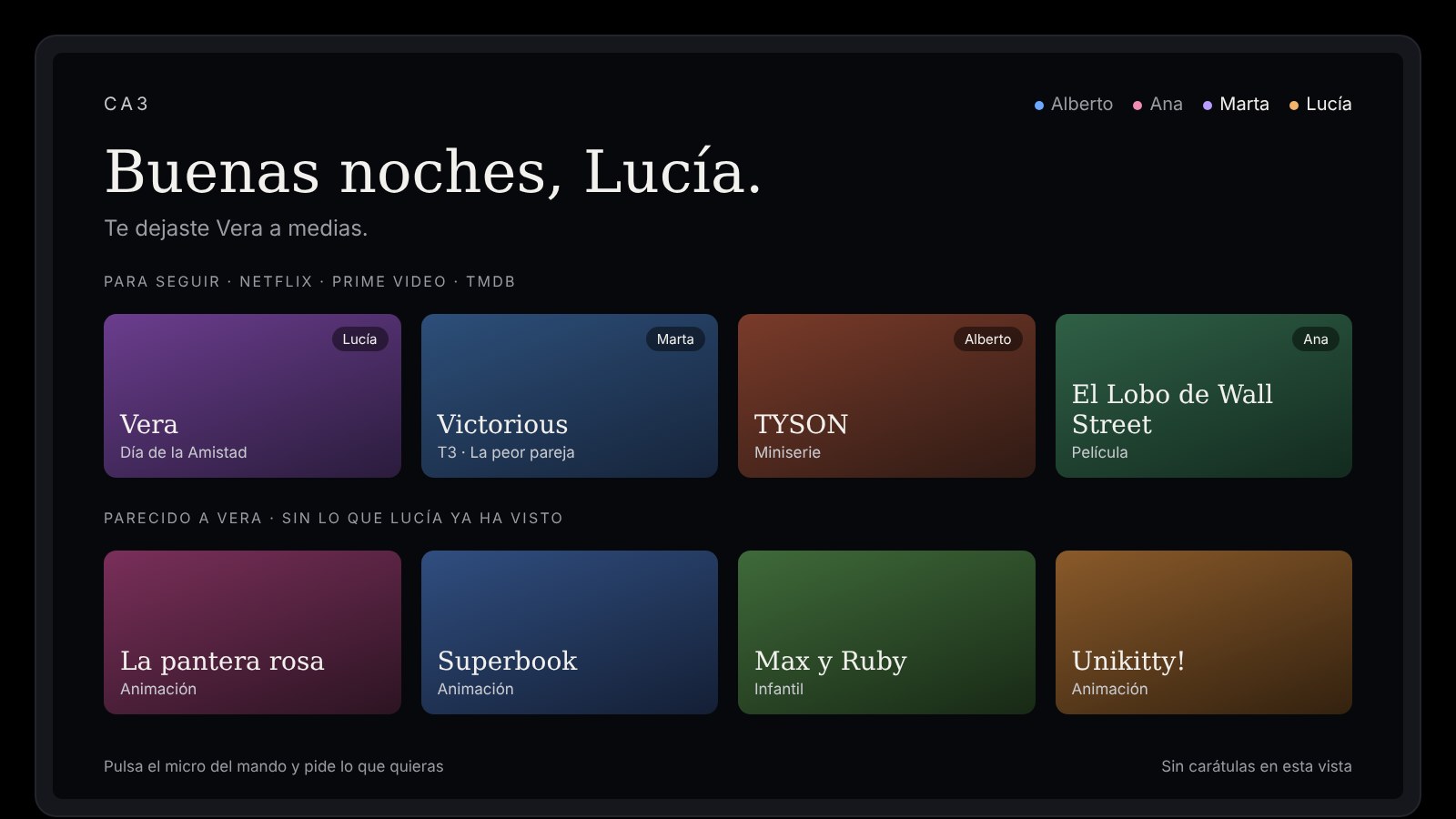
Ask with the remote for something like a title you loved. TMDB brings the candidates and the model with CA3 picks one that person has not seen yet. The home screen opens on what each one left half-watched.
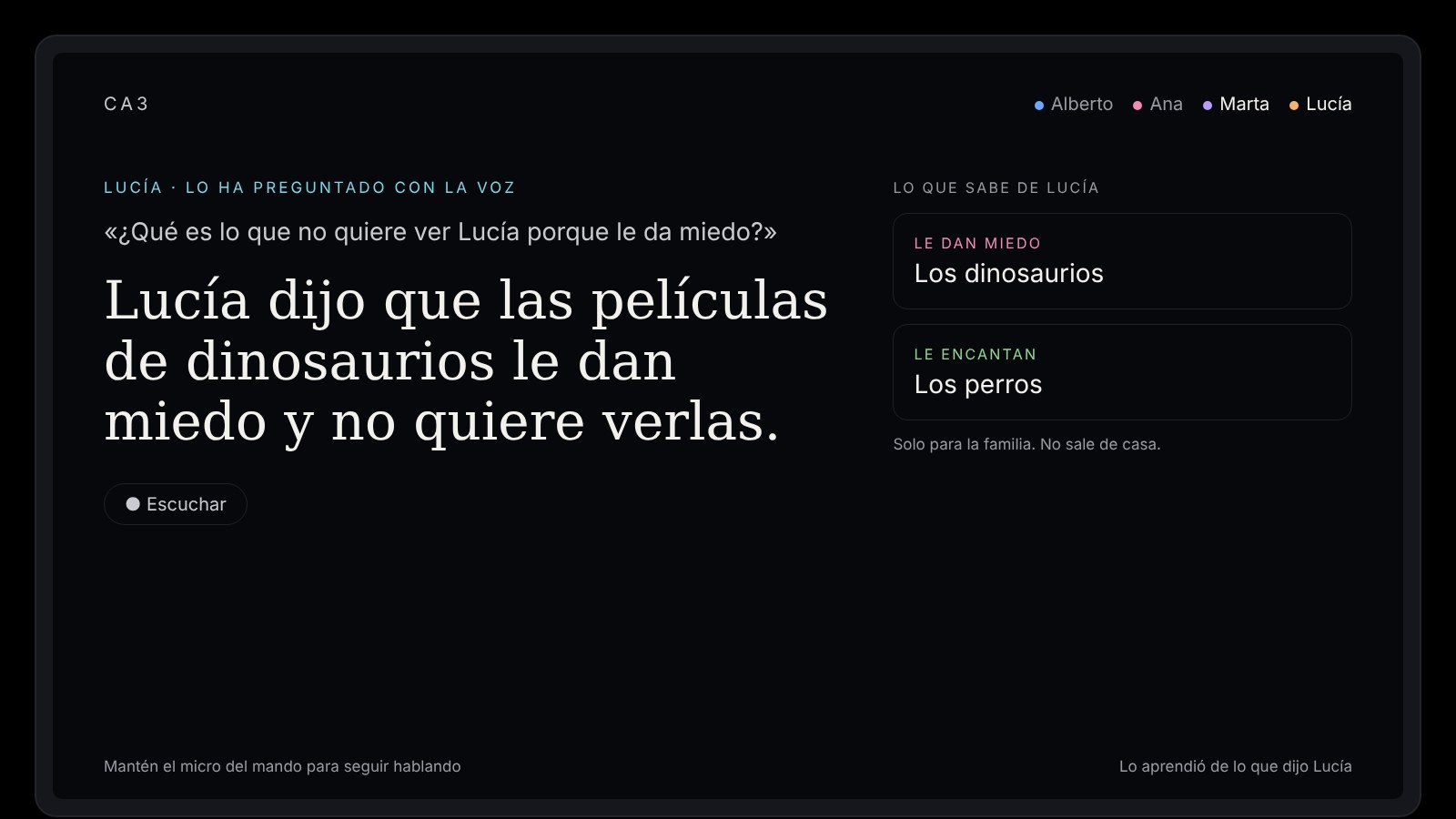
A platform knows what was watched, not that the younger daughter is scared of dinosaur films or what her sister wants to learn. The family said it once, and the assistant took it into account from then on.
A visiting niece is added in one tap. When she leaves, the family asks for her data to be erased, and for a series to be offered no more. By the next morning both are gone, and the rest stays as it was.
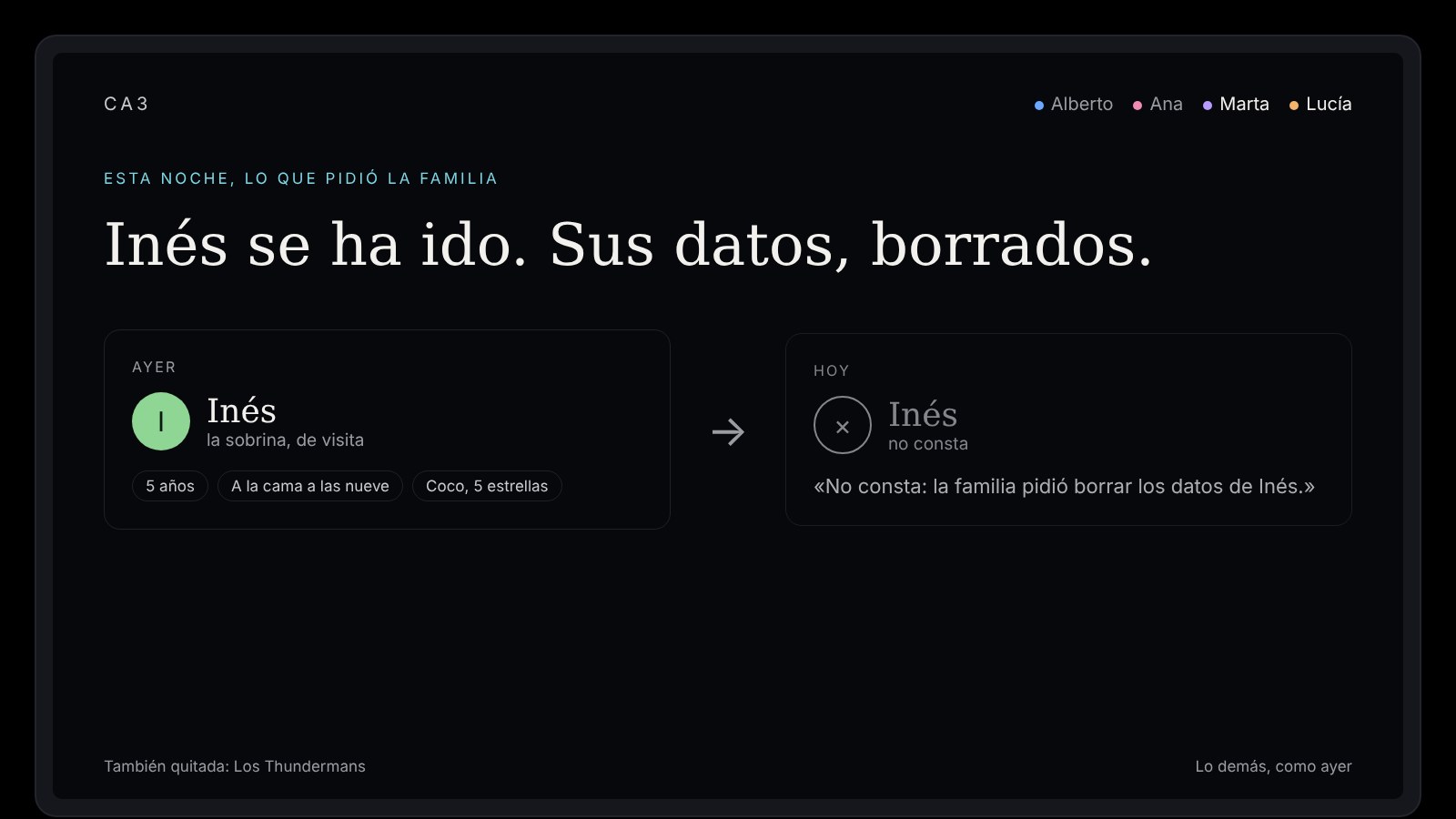
The viewing is the family's own, from their Netflix and Prime Video profiles. Ratings, what they said, the niece and the two requests to forget are simulated.
| Who answered | Questions | What it brings |
|---|---|---|
| The TV database with CA3 | 268 | viewing facts, with what the family said |
| CA3 alone | 51 | what the family said |
| The TV database alone | 29 | new releases, a film for everyone |
| CA3 with TMDB | 21 | something like this |
For a streaming app, a set-top box or a TV: an assistant that learns each household, keeps what it must never forget and erases what it is asked to.
ContactAll use casesResults from a recorded test. The mechanism is not shown. Not produced or endorsed by Sony, Google, Netflix, Amazon, Disney, TMDB or Alibaba Cloud. CA3 is developed by Alberto Acedo, PhD, at Biome Makers Inc.
 CA3